

Why texture matters - The Humanity of Original Artwork Over Sterility of AI Generated Imagery
Tactility is important. The texture, feeling and real presence created by human hands have a profound impact on our response to a piece of artwork whether we realise it straight away or not. Let’s dive into what makes originals so powerful.
Why collectors are drawn to originals
One of the things my clients love about my original art is its humanity. It is created by my hands, my thought processes, my responses to the materials as I work. They aren't only buying an image. They're buying a moment in my studio. Every print carries evidence of decisions that happened only once. Decisions that came from me in that specific moment. The artwork is a culmination of experiences, decisions and skill.
When someone stands in front of an original artwork, they aren't simply looking at an image. Their eyes follow the ridges of ink, the layers of paint and the tiny imperfections left by the artist's hands. Our brains are remarkably good at imagining touch through sight alone, which is one reason originals have such a physical presence. Researchers call this "haptic perception." Football stadiums have leant into this with technology that allows deaf fans to feel vibrations that help them to feel the sound of the cheers. Art lovers translate what they see - the shadows, the bumps and the shine - into what they would feel even when they’re not allowed to reach out and touch.

Every decision remains visible in an original artwork. The carved line that couldn't be undone. The layer that was printed or painted over. The colour that changed halfway through because the artist needed something different. Those decisions become part of the finished piece even if they’re not immediately apparent.
Why I no longer fear blank paper
Blank pages used to be intimidating but I have learned that it's just a place to start. I put down those first marks knowing that I can work over the top of them, layer up, remove, alter. It's all part of the process so I no longer fear the blankness. I relish the excitement and possibility of what I could create.
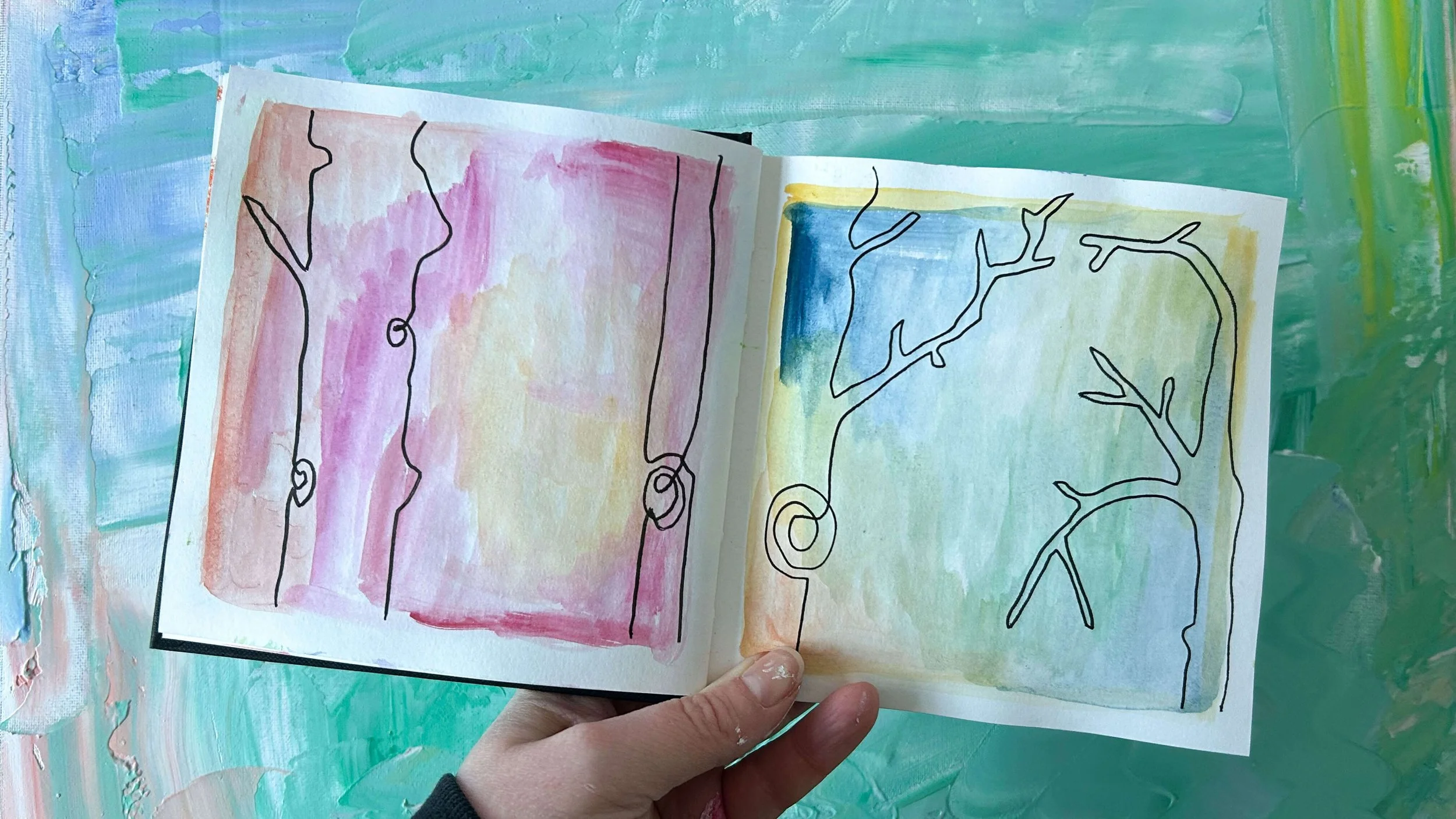
The other day, a client visited the studio and asked me 'How do you start with a blank canvas?'.
I don't begin with certainty. I begin with curiosity. Most recently, I begin thinking about the story I am telling with the piece. For example, I am currently working on a collection of pieces inspired by the gardens of my youth so I think about the memories and mood of those places before I begin. Often those feelings connect to particular colours and I lay them down before concerning myself with the shapes or lines that will sit on the surface at the end.
When I begin a new piece, I don't know exactly where it will end. Whether I am creating a linocut or a painting, I respond to each layer, each unexpected mark, each colour. Sometimes , despite the planning process I go through before carving, the print surprises me and I go in a different direction than I intended. Sometimes a split second meeting of two paint colours creates a reaction and completely changes what I do next. That conversation between artist and material is part of what creates the finished artwork.
What AI lacks

AI is fascinating and truly mind boggling but it does not produce art - imagery, yes but art, no.
AI can generate imagery, but original art carries the record of human decisions.
It’s the humanity that gives original artwork its lasting presence. Often imperfections and mistakes can lead to more beauty. It’s the happy accident. The Japanese celebrate these breakages and errors as part of th journey. Kintsugi (meaning "golden joinery") is an ancient Japanese repair technique using natural lacquer mixed with powdered metals (often gold) to create a visible mend that celebrates the life of the pottery.
It’s the same with other art forms. We are not perfect beings. We respond to imperfection and recovery. That’s where the creativity lives.
If you'd like first refusal on my new work before this collection launches, join my Collector's List
